
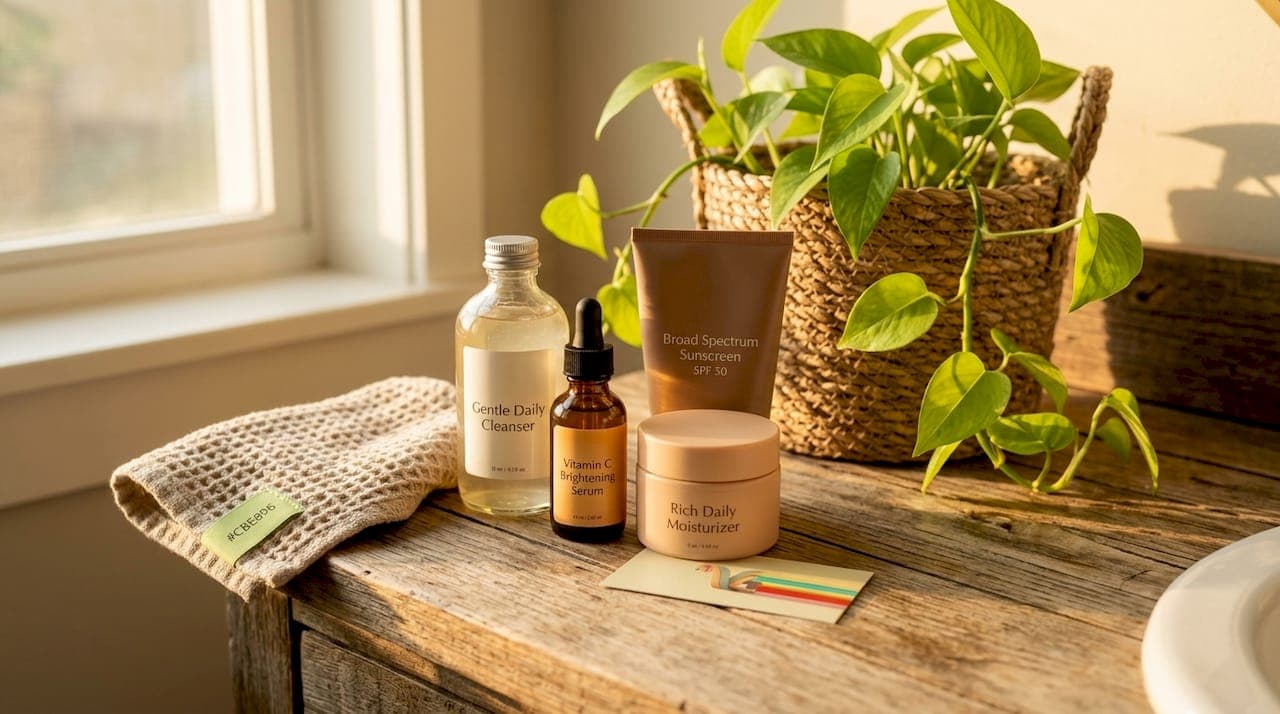
A brightening skincare routine essential is a systematic, evidence-based approach using targeted actives, strict photoprotection, and barrier-supportive hydration to reduce hyperpigmentation, dark spots, and uneven skin tone. If you are dealing with melasma, post-inflammatory hyperpigmentation (PIH), or stubborn dark spots, the right routine does not just mask the problem. It interrupts the biological process that creates excess pigment in the first place. Ingredients like niacinamide, thiamidol, tranexamic acid, and Vitamin C are the backbone of any glowing skin routine that delivers real, measurable results.
1. Brightening skincare routine essentials: the full step-by-step
Every effective brightening routine follows a logical sequence. Each step prepares your skin for the next, and skipping one weakens the whole system.
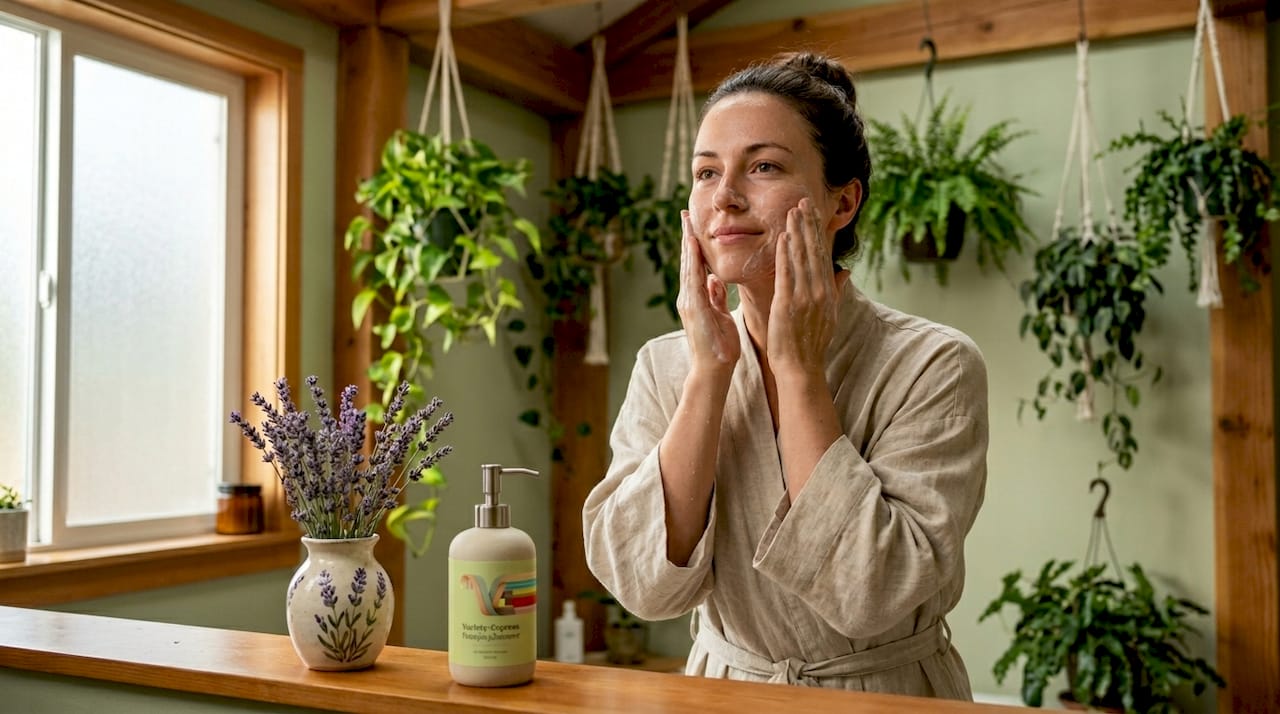
Step 1: Gentle cleanser. Start with a sulfate-free, pH-balanced cleanser that removes impurities without stripping your moisture barrier. A compromised barrier triggers inflammation, and inflammation drives pigment production. This is the one step where "gentle" is not optional.
Step 2: Toner (optional but strategic). A hydrating, alcohol-free toner preps skin to absorb actives more efficiently. Look for formulas with niacinamide or hyaluronic acid. Skip anything with witch hazel or high alcohol content if your skin runs sensitive.
Step 3: Brightening serum. This is the workhorse of your daily skincare brightness routine. Apply your targeted active here, whether that is niacinamide, thiamidol, tranexamic acid, or a Vitamin C serum. Serums deliver the highest concentration of actives directly to the skin.
Step 4: Moisturizer. Seal in your actives and reinforce your barrier with a moisturizer suited to your skin type. Barrier support is not optional when you are using potent brightening agents. Barrier disruption from overuse of actives causes inflammation-driven pigment worsening, which directly undoes your brightening work.
Step 5: Broad-spectrum sunscreen (morning only, non-negotiable). SPF is not a finishing touch. It is the single most important step in any brightening routine. Without it, UV and visible light continue stimulating melanogenesis even while your actives are working.
Pro Tip: Apply your brightening serum to slightly damp skin immediately after toning. Damp skin absorbs water-soluble actives like niacinamide and tranexamic acid more readily, improving penetration without increasing irritation risk.
2. Which active ingredients actually brighten skin
Not all brightening actives work the same way. Understanding the mechanism behind each one helps you choose the right combination for your specific pigmentation concern.
Niacinamide inhibits melanosome transfer from melanocytes to keratinocytes, which is the actual delivery mechanism that makes dark spots visible on the skin surface. Topical 4% niacinamide shows efficacy comparable to 4% hydroquinone with better tolerability and zero reports of ochronosis, a permanent skin darkening side effect associated with hydroquinone overuse. Niacinamide is the safest entry point for anyone new to brightening actives, including those with sensitive or melanin-rich skin.
Thiamidol is a selective human tyrosinase inhibitor, meaning it targets the specific enzyme responsible for melanin synthesis without broadly disrupting skin function. 0.2% thiamidol cream produced significant reductions in mMASI scores at weeks 4, 8, and 12 in adults with Fitzpatrick III to V skin types. That finding matters because Fitzpatrick III to V represents the skin tones most vulnerable to hyperpigmentation and most underserved by clinical research.
Tranexamic acid (TXA) blocks melanogenesis through an anti-inflammatory pathway and accelerates pigment clearing, particularly when combined with professional procedures. Topical tranexamic acid serum after microneedling and chemical peels accelerates dyspigmentation resolution by suppressing melanogenesis during the vulnerable post-treatment inflammation window.
Vitamin C functions primarily as an antioxidant that neutralizes free radicals generated by UV exposure, which would otherwise trigger melanin overproduction. It also mildly inhibits tyrosinase. Vitamin C skincare essentials work best as a morning layer under sunscreen, where they reinforce photoprotection at the cellular level.
Pro Tip: Do not layer niacinamide and Vitamin C in the same step. Apply Vitamin C first, let it absorb for 5 minutes, then follow with niacinamide. This prevents the formation of niacin, a compound that can cause temporary flushing in sensitive skin.
| Ingredient | Mechanism | Best for | Tolerance level |
|---|---|---|---|
| Niacinamide | Inhibits melanosome transfer | All skin types, beginners | High |
| Thiamidol | Selective tyrosinase inhibition | Moderate to severe hyperpigmentation | High |
| Tranexamic acid | Blocks melanogenesis, anti-inflammatory | Melasma, PIH, post-procedure | Moderate to high |
| Vitamin C | Antioxidant, mild tyrosinase inhibition | UV-driven pigmentation, prevention | Moderate |
3. Why sunscreen is the anchor of every brightening routine
Photoprotection is not preventive care layered on top of your brightening routine. It is the mechanism that makes your brightening routine work at all. UV and visible light exposures continue to stimulate melanogenesis even during active treatment, which means every day you skip sunscreen, you are partially resetting your progress.
The 2026 clinical guidelines are specific about what "adequate" sunscreen actually means:
- SPF 50 or higher with both UVA and UVB coverage
- HEVL (high-energy visible light) protection for darker skin types, where visible light alone can worsen melasma. Broad-spectrum protection including UVB, UVA, and visible light filters is clinically recommended for hyperpigmentation management
- Iron oxide-containing physical blockers in sunscreen formulas, which are gaining prominence for pigment-prone and melanin-rich skin types because they filter visible light that standard chemical UV filters miss
- Correct dosing: roughly one-quarter teaspoon for full facial coverage, applied twice daily
"Photoprotection is not only preventive but a treatment enabler in melanin hyperpigmentation, preventing pigment relapse." — 2026 Global Guideline Summary
Beyond sunscreen, shade-seeking behavior, UV-protective garments, and sunglasses all reduce cumulative light exposure that drives pigment production. These are not optional lifestyle upgrades. They are clinical recommendations.
4. Complementary practices that speed up brightening results
A well-built at-home routine gets you far. Pairing it with the right complementary practices gets you further, faster.
- Mild chemical exfoliation with glycolic acid or salicylic acid accelerates cell turnover, which physically removes pigmented cells from the skin surface while improving penetration of brightening actives. Use 1 to 2 times per week, not daily, to avoid barrier disruption.
- In-office procedures like IPL, fractional lasers, and microneedling create controlled injury that triggers skin renewal. Combined treatment of topical tranexamic acid with IPL produces significantly greater melasma improvement than IPL alone, with mMASI decreasing 50.52% versus 38.49% at month 5. That gap represents the difference between good results and excellent ones.
- Post-procedure topical care is where tranexamic acid serum earns its place. Applied after microneedling or chemical peels, it suppresses the melanogenesis spike that post-treatment inflammation would otherwise trigger.
- Barrier support between procedures is non-negotiable. Ceramide-rich moisturizers and gentle cleansers protect the skin during the recovery window and prevent irritation-driven PIH, which is a common and frustrating setback for darker skin tones.
For a deeper look at integrating professional procedures with your at-home care, the pigmentation treatment guide at Variety-express covers the sequencing in practical detail.
5. How to customize your routine for your skin type and pigmentation
Brightening skincare requires adaptability. Hormonal melasma, PIH, and lentigines respond differently to treatments and actives, making personalization the difference between a routine that works and one that stalls.
Here is how to calibrate your approach:
- Sensitive or dry skin: Start with niacinamide at 5% as your sole active for the first 4 to 6 weeks. Add a ceramide-heavy moisturizer and hold off on exfoliants until your barrier is stable.
- Oily or combination skin: You can tolerate a more active-forward routine earlier. Introduce salicylic acid exfoliation weekly alongside niacinamide, then layer in tranexamic acid after 4 weeks if your skin is responding well.
- Moderate to severe hyperpigmentation: Escalate to thiamidol or a tranexamic acid serum after establishing a stable baseline. Monitor for irritation at each new introduction. The goal is consistent progress, not speed.
- Post-procedure skin: Pause all exfoliants and potent actives for 5 to 7 days after any in-office treatment. Prioritize barrier repair with gentle cleansing, a fragrance-free moisturizer, and strict SPF 50+ application.
- Melasma specifically: This condition is hormonally driven and notoriously prone to relapse. Photoprotection must be maintained year-round, not just during active treatment phases.
The brightening product selection guide at Variety-express walks through how to combine ingredients without triggering the irritation that sets pigmentation back.
Pro Tip: Introduce one new active at a time and wait two full weeks before adding another. This is the only reliable way to identify what is working and what is causing a reaction.
Key takeaways
A brightening skincare routine works only when photoprotection, targeted actives, and barrier support operate together as a system, not as isolated steps.
| Point | Details |
|---|---|
| Sunscreen is treatment, not prevention | Without SPF 50+ daily, brightening actives cannot overcome ongoing melanogenesis stimulation. |
| Niacinamide is the safest starting active | It matches hydroquinone's efficacy with superior tolerability, making it ideal for sensitive and melanin-rich skin. |
| Thiamidol and TXA escalate results | These clinically validated actives target tyrosinase and melanogenesis for moderate to severe hyperpigmentation. |
| Procedures amplify topical results | IPL combined with tranexamic acid serum outperforms IPL alone by a measurable margin. |
| Barrier damage reverses progress | Overusing actives triggers inflammation that worsens pigmentation, so gentleness is a strategy, not a compromise. |
What I have learned building brightening routines that actually last
The most common mistake I see is treating a brightening routine like a sprint. Someone finds a potent serum, applies it twice daily, skips moisturizer because their skin feels oily, and then wonders why their dark spots look worse after six weeks. What happened is textbook: the barrier broke down, inflammation set in, and PIH deepened. Patience and barrier care are not soft advice. They are clinical requirements.
The second pattern I see constantly is underestimating sunscreen. People invest in a $40 brightening serum and then apply a thin layer of SPF 15 tinted moisturizer and call it done. That is not photoprotection. That is decoration. The 2026 guidelines are unambiguous: broad-spectrum SPF 50 or higher, correctly dosed, applied twice daily, is the cornerstone of any pigmentation treatment plan.
What actually works long-term is a routine built in layers. Start with what your skin can tolerate. Add actives one at a time. Protect aggressively. And if you are going to invest in a procedure, pair it with a topical tranexamic acid protocol to lock in the results. The brightening routine fundamentals covered on the Variety-express education portal reflect this exact philosophy: evidence-based ingredients, barrier-first sequencing, and sunscreen as the non-negotiable anchor.
The brands and ingredients that earn long-term trust are the ones that work with your skin biology, not against it.
— Variety
Build your brightening routine with Variety-express
Variety-express formulates every product around the active ingredients that clinical research actually supports: Arbutin, Glutathione, Kojic Acid, Vitamin C, Nano Gold, Manuka Honey, and Turmeric. The full range sits between $10 and $30, which means you can build a complete brightening routine without choosing between efficacy and budget.

Every SKU is designed for the skin types that need brightening most: melanin-rich, hyperpigmentation-prone, and acne-scarred. The formulations are natural and organic, built to deliver an at-home spa experience without the ingredient trade-offs that cheaper products make. Browse the full organic brightening collection at Variety-express and find the routine that fits your skin, your tone, and your goals. Express Yourself.
FAQ
What are the must-have steps in a brightening skincare routine?
A brightening routine requires five steps: a gentle cleanser, an optional hydrating toner, a brightening serum with actives like niacinamide or tranexamic acid, a barrier-supportive moisturizer, and a broad-spectrum SPF 50 or higher sunscreen every morning. Skipping any step reduces the effectiveness of the others.
Which brightening ingredient is best for dark skin tones?
Niacinamide is the safest starting point for melanin-rich skin because it inhibits melanosome transfer without the irritation risk that can worsen PIH. Thiamidol has also shown strong results in Fitzpatrick III to V skin types in clinical trials.
How long does a brightening routine take to show results?
Most evidence-backed brightening actives show measurable improvement between 4 and 12 weeks of consistent use. Thiamidol showed significant mMASI score reductions at weeks 4, 8, and 12 in clinical trials, which reflects a realistic timeline for real-world results.
Can I use multiple brightening actives at the same time?
Yes, but introduce them one at a time with a two-week gap between each new addition. Layering too many actives at once increases irritation risk, which can trigger inflammation-driven pigmentation and reverse your progress.
Does sunscreen really make that big a difference in brightening results?
Sunscreen is the single most impactful step in any brightening routine. UV and visible light continue stimulating melanin production even while actives are working, so without daily SPF 50 or higher, brightening treatments consistently underperform regardless of ingredient quality.